


Robots in Manufacturing: The Implications for Industry 4.0
Posted on 05/15/24


Overview
In manufacturing, robots are machines programmed to carry out repetitive tasks on production lines or in assembly processes. General Motors made history in 1961 by installing Unimate, the first industrial robot, to aid in die casting and welding. Since then, the use of robots has rapidly increased. Nowadays, robotics have become integrated across all parts of manufacturing for improving productivity, quality, and efficiency.
For manufacturers aiming to streamline their operations, cut costs, and stay competitive, automation is crucial. Robots are particularly adept at handling monotonous, dirty, dangerous, or highly precise tasks more quickly, accurately, and consistently than humans can. This shift towards robotic automation for routine tasks allows the workforce to concentrate on more complex and innovative activities.
Moreover, the use of robots enhances product quality and reduces mistakes. Faced with global competition and fast-changing technology, adopting robotic automation is now vital for manufacturers of any size.
Types of Robots in Manufacturing
Manufacturing robots come in various forms designed for different purposes. The main types of robots used in manufacturing include:
SCARA Robots
- Selective Compliance Articulated Robot Arm or SCARA robots are a common choice for assembly, pick and place, and handling operations. They have two parallel rotary joints to provide compliance in a specific plane. Their cylindrical work envelope makes them ideal for tabletop tasks.
Cartesian Robots
- Cartesian robots, equipped with three linear joints, move with high precision along the X, Y, and Z axes. Commonly used for pick-and-place tasks and other high-speed, repetitive activities, these robots offer precision movement but operate within a limited work area.
Collaborative Robots
- Engineers created collaborative robots, or “cobots”, to interact safely with humans in a shared workspace, eliminating the need for safety barriers. These lightweight robots incorporate force-limiting technology at their joints and additional safeguards to ensure safe operation. Humans can quickly program cobots to handle repetitive or hazardous task.
Mobile Robots
- Mobile robots combine movement and functionality to autonomously navigate within a facility. Manufacturers can customize robotic platforms with arms, grippers, sensors, etc. Manufacturers typically deploy them for material transport, inventory management, and flexible automation.
Applications for Robots in Manufacturing

Assembly
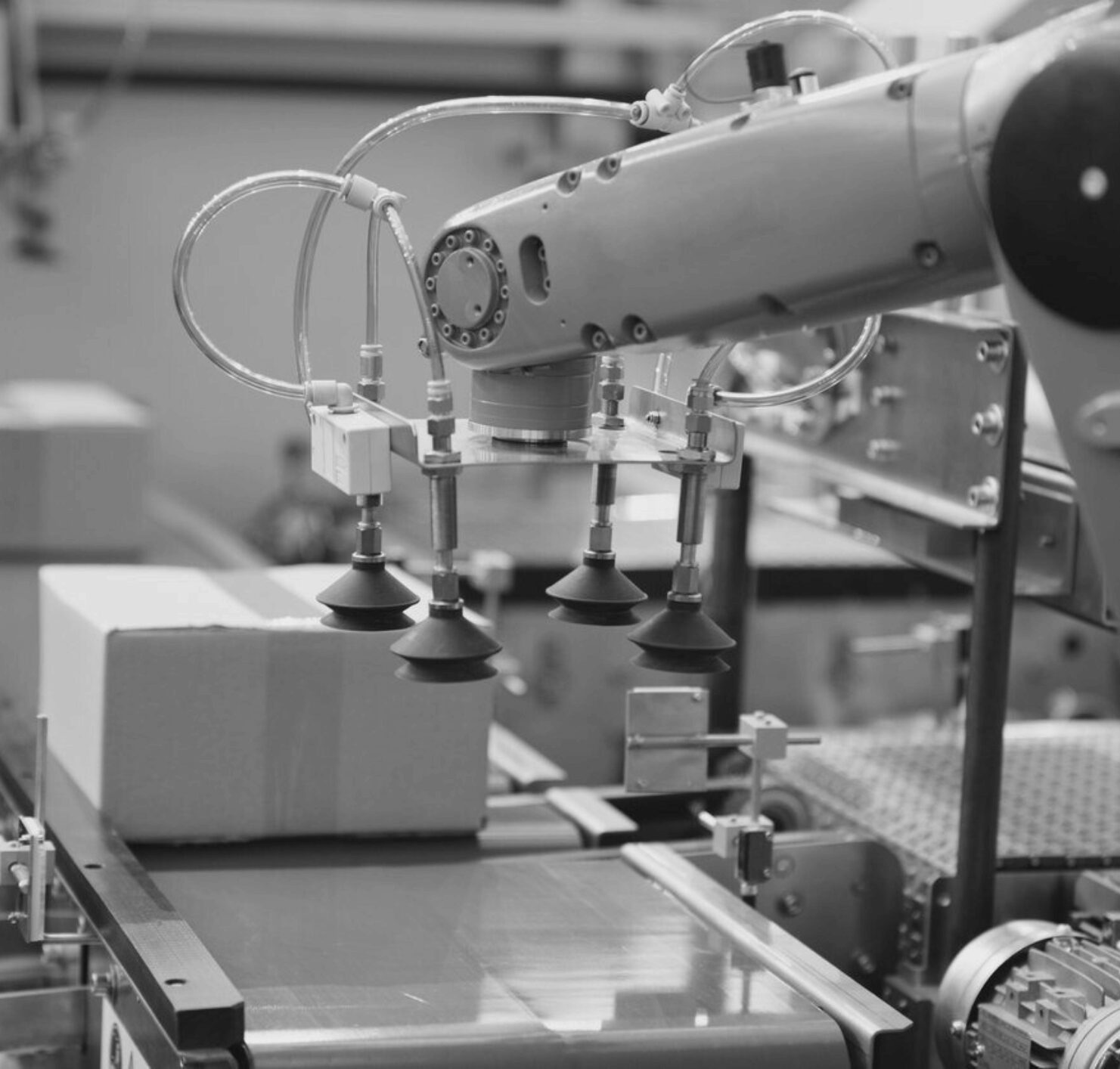
Assembly encompasses a wide range of manufacturing processes where robots excel. Robotic arms with grippers and suction cups can quickly pick up parts from vibratory bowls or conveyors and accurately place them into products. Multi-axis articulated robots are ideal for tricky assemblies requiring dexterity and finesse. Robots eliminate human error and fatigue in assembly while boosting throughput.
Material Handling
Material handling includes transporting, sorting, palletizing and machine tending. Companies are increasingly using mobile robots and autonomous guided vehicles (AGVs to transport materials between locations without wire guides.
Robotic arms can pick up and sort objects for kitting and sorting tasks. They’re also good at stacking and preparing finished products for storage and shipping efficiently. Additionally, these robots are useful for machine tending tasks, such as handling parts in and out of CNC machines.

Welding
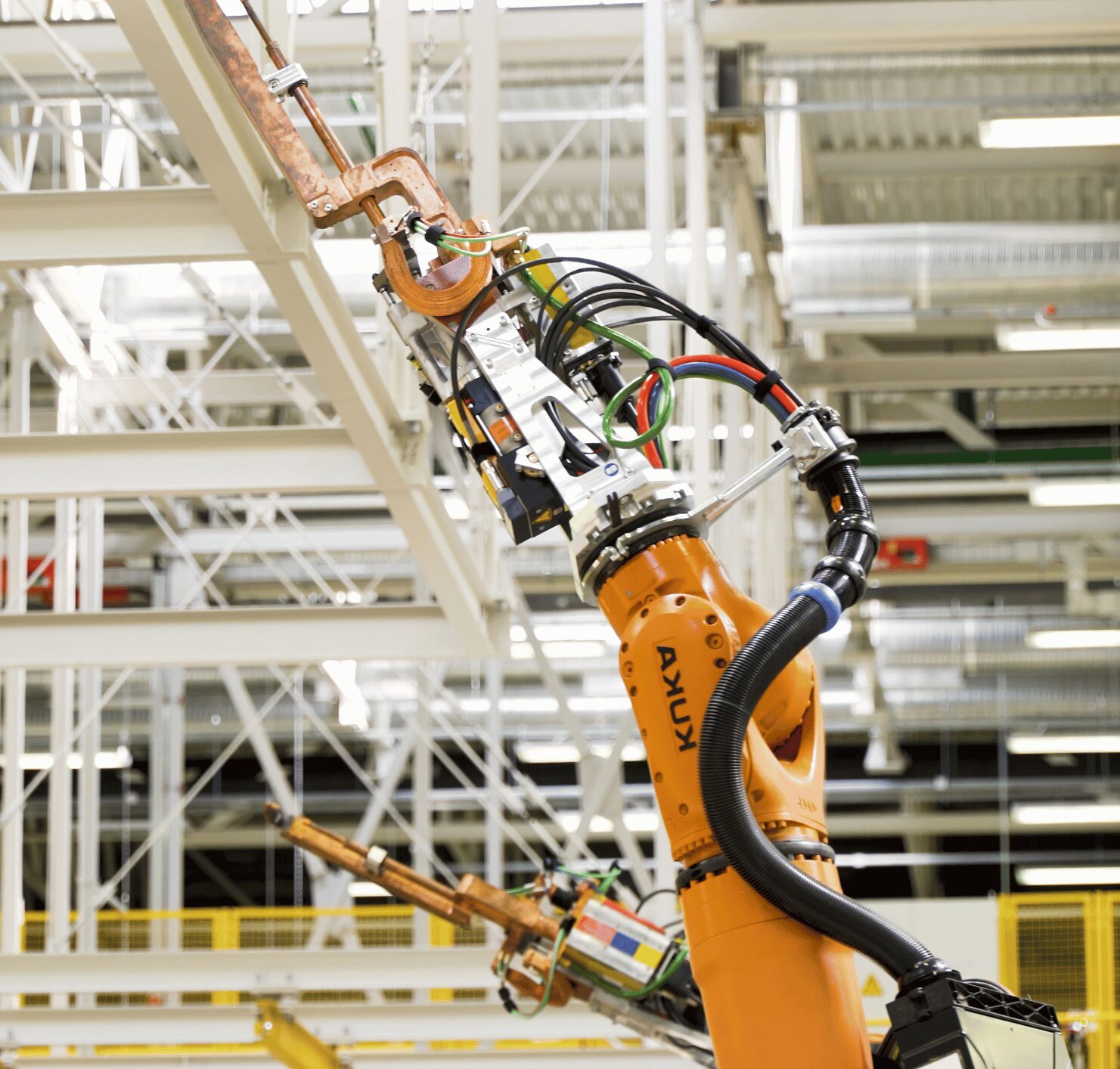
Industrial robots first gained traction in high-volume welding applications in the automotive industry. Their ability to make highly consistent welds with precision far exceeding manual welding redefined productivity in welding lines. Robotic welders are now ubiquitous in heavy industries to assemble large products like ships, offshore platforms and construction equipment. Welding robots promote quality and throughput while reducing dependence on skilled labor.
Painting and Finishing
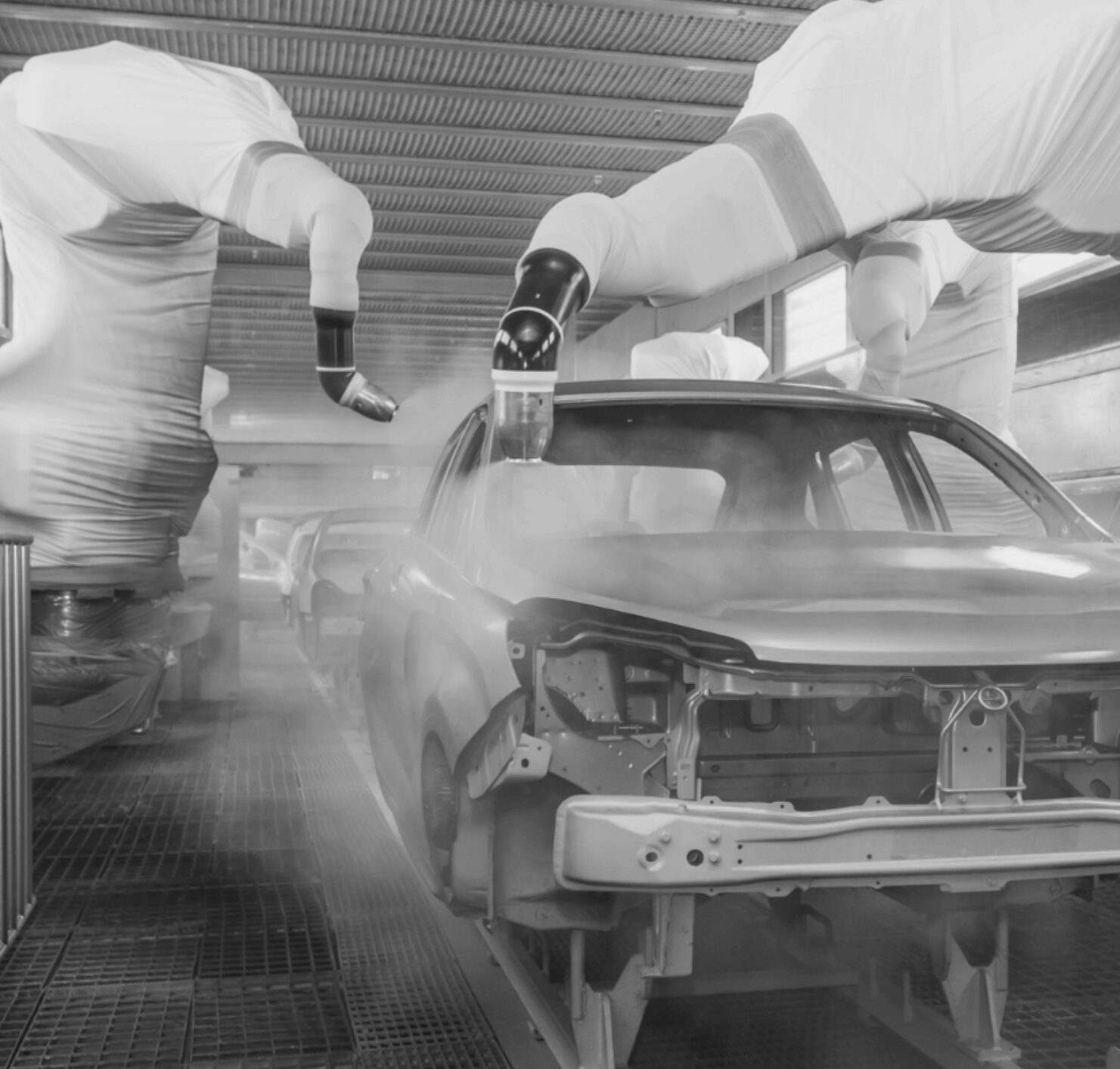
Robots can safely and efficiently complete dangerous painting jobs. They are especially good at painting large items like cars, plane parts, and wind turbine blades evenly. Plus, robots can easily switch colors and finishes, which is great for factories that make different products.

Packaging and Palletizing
Packaging and palletizing tasks, often repetitive, are now more efficiently automated using adaptable robots. Delta robots stand out for their ability to rapidly pick up items and precisely place them in containers or boxes. Workers program these robots to handle different products softly and pack them in specific arrangements.
Articulated and SCARA robots can stack items like boxes and bags onto pallets neatly and without causing damage, making the process more efficient. Robotic depalletizing makes unloading pallets faster and gets products ready quickly for the next step in processing.
Benefits of Robots in Manufacturing
Robotic automation offers numerous benefits that make it an extremely appealing option for manufacturers looking to streamline operations, reduce costs, and improve overall productivity. Some of the key advantages of using robots in manufacturing include:
Increased Productivity and Efficiency
- One of the foremost benefits of manufacturing robots is their ability to dramatically increase productivity and efficiency. Robots can operate 24/7, at high speeds, without ever getting tired. They perform repetitive tasks with precision and accuracy unmatched by human workers.
- Robots also enable parallel processing, carrying out multiple production steps simultaneously. This results in higher throughput, faster production cycles, and the ability to scale output.
Improved Product Quality and Consistency
- Robots excel at repetitively performing identical tasks with a high degree of accuracy. This results in improved product quality and consistency that is difficult to achieve with human workers alone. Robots help eliminate defects and variations, leading to products that meet specifications precisely with every iteration. The uniform quality ensures customer satisfaction.
Enhanced Worker Safety
- Robots can take over hazardous tasks that may be unsafe for human workers, such as working with toxic materials, moving heavy payloads, or operating in extreme temperatures. This helps create a safer working environment. Industrial robots also reduce the risks of workplace injuries related to repetitive motions. Moreover, adopting robots enhances occupational health and safety.
Greater Flexibility
- Users can accomodate new products configurations easily using workcells that are modular and flexible. This makes robotics ideal for mixed-model or low-volume production. Robots also enable easy scalability and capacity expansion to meet growing production demands. Their flexibility and reconfigurability provide agility in adapting to market changes.
Challenges and Considerations
Of course, manufacturers face challenges and must consider a number of relevant challenges when considering adding robots to their shop floor.
Upfront Costs
The upfront costs of purchasing and installing robots can be significant, especially for small and medium enterprises. Industrial robots can cost tens of thousands of dollars, in addition to integration, programming, and maintenance expenses. While automation leads to long-term savings, the initial investment may be prohibitive for some manufacturers.
Integration Complexity
Integrating robotics into existing manufacturing environments can be complex. Programming and configuring the robots to interface with other systems and processes requires expertise. If not done properly, the benefits of automation may fail to materialize.
Programming and Maintenance
Robots typically lack specialized skills, requiring human input to program them. Retraining staff or hiring qualified robotics specialists adds to costs. As production needs evolve, staff need to maintain and update the programming regularly. Downtime from insufficient maintenance can erase productivity gains.
Workforce Training
As robots take over repetitive and dangerous jobs, the skills employees need change. Manufacturers must invest in retraining programs to upskill workers to operate, program, and maintain the robots. Insufficient training can lead to suboptimal utilization of robots or safety risks. Managing labor displacement issues is also critical.
Collaborative Robots
Collaborative robots, or cobots, are transforming how humans interact with machines in manufacturing settings. Designed to operate safely alongside human workers, cobots facilitate closer human-machine collaboration.
Unlike traditional industrial robots that operate autonomously behind closed cages, cobots can work shoulder-to-shoulder with employees. This allows for more flexible production methods and makes better use of robot capabilities and human skills.
The biggest advantage of cobots is their ability to combine the precision and strength of robots with human dexterity, problem-solving skills, and adaptability. By working together, humans and robots can enhance quality, efficiency, and productivity beyond what either could accomplish alone.
Cobots use advanced sensors, computer vision, and artificial intelligence to actively avoid collisions with operators in shared workspaces. If a person approaches too closely, they automatically decelerate or halt. Additionally, cobots operate at reduced speeds and force to ensure safe interaction in accidental contact.
Safety rules, such as those in ISO 10218 and ANSI RIA 15.06, set the standards for building and using cobots. With appropriate safety precautions, cobots can work more closely with people, helping to boost factory productivity. These user-friendly and adaptable robots are easy to integrate across various industries that want to take advantage of automation.
Industry 4.0 and Smart Manufacturing
Industry 4.0, or the fourth industrial revolution, involves using advanced technologies like robotics, artificial intelligence (AI), the internet of things (IoT), data analytics, and machine learning in manufacturing. This wave of digital change is boosting production efficiency, quality, and adaptability.
In this new era, robots have become crucial for smart manufacturing. They help factories analyze and enhance production processes by using data in real time.
Robotic sensors monitor equipment performance, product quality, inventory levels, and energy usage. Then, algorithms review to find problems, predict when repairs are needed, and suggest improvements.
Robots can also adapt in real-time to fluctuations in production volume, product variants, and other variables. With a flexible and reconfigurable production line, manufacturers can switch between products and scale output based upon changing demands.
Advanced computer vision further enhances robot capabilities in smart factories. Robots can visually inspect items for defects and track inventories without human intervention.
The integration of robotics with IoT, data analytics, and AI ushers in an era of predictive maintenance. By monitoring vibration, temperature, lubrication levels, and other operating parameters, manufacturers can detect issues before they cause downtime. The data also helps optimize maintenance scheduling, spare parts inventory, and technician workflows.
With Industry 4.0, robots essentially become autonomous and self-optimizing assets. This creates a more agile, efficient, and resilient manufacturing value chain that can rapidly adapt to market changes. Robotics integration is key for manufacturers aiming to leverage data-driven insights and digitally transform operations.
Software and Controllers
Robotic automation relies heavily on software and controllers to program, simulate, and operate robots efficiently and safely. Some key elements of robotics software and controls include:
Simulation and Programming Tools
Powerful robotics software is crucial for programming robots and simulating their movements and actions before real-world deployment. Major robotics companies offer proprietary software suites with features like 3D visualization, motion planning, device integration, code generation, and simulation capabilities. These tools allow programmers to “teach” robots through various methods like lead-through programming, motion capture, and CAD-based offline programming. They enable rapid prototyping and optimization of robot programs.
Vision Systems and Sensors
Vision systems including cameras and image processing software equip robots with machine vision capabilities. This allows robots to “see” and perceive their environment, identify parts, and provide visual feedback for tasks that require high precision like product inspection. Sensors like force/torque sensors, proximity sensors and laser scanners provide vital input about a robot’s surroundings and interactions. This sensory data is used to ensure safe and efficient robot motion.
Robot Controllers
The robot controller acts as the robot’s “brain”. It houses the main processing unit and interfaces for integrating sensors, end-of-arm tooling, programming pendant and any other devices. The controller executes the user-defined robot application programs and motion commands and performs critical monitoring to ensure safe operation.
It provides the essential hardware and software infrastructure to control and coordinate all robot movements and actions. Most industrial robot controllers offer options for both online and offline programming and simulation.
Emerging Trends in Manufacturing Robotics
The manufacturing industry is experiencing rapid changes driven by advances in robotics and automation. Some key emerging trends shaping the future of manufacturing robotics include:
Mobile Robots and Autonomous Guided Vehicles (AGVs)
Traditional industrial robots are fixed in place, but mobile robots and AGVs can move freely within a facility. Mobile robots utilize sensors and navigation technology to transport materials, pick and place components, and perform other tasks without being confined to a single workspace. This enables greater operational flexibility.
AGVs follow pre-programmed routes around a facility and can autonomously deliver parts between workstations. Mobile robot adoption is surging in smart factories looking to streamline material handling and logistics.
Additive Manufacturing and 3D Printing
Also known as 3D printing, additive manufacturing (AM) is the process of creating objects layer-by-layer using materials like polymers, metal alloys, or concrete. AM enables on-demand production without dedicated tooling or molds.
Robots are being leveraged in AM processes to improve precision, quality, and speed. Their ability to make quick adjustments allows for optimization of build paths, temperature control, and material delivery.
Robotic Automation for SMEs
Historically, barriers like high costs have prevented small and medium enterprises (SMEs) from adopting robotics. However, falling prices along with compact, user-friendly collaborative robots (cobots) are making automation viable for SMEs.
SMEs can start small with a single cobot to automate repetitive or unsafe tasks. Plug-and-play cobots are easy to program and typically have fast payback periods given their affordability. Robotics give SMEs a competitive edge via increased productivity.
Future Outlook and Opportunities
The future of robotics in manufacturing looks promising, with adoption rates projected to grow in as costs decline. According to the International Federation of Robotics (IFR), robot installations in manufacturing increased 10% in 2021 to over 517,000 units, and are forecasted to reach nearly 584,000 units in 2022.
Several new applications for robotics on the horizon include utilizing robots for tasks like adhesive and sealant application, composite material production, and handling of soft or delicate objects like fabrics and foods. Research is also ongoing into using robots for construction tasks like bricklaying, welding, and 3D printing of buildings.
As manufacturers continue to adopt robotics, there will be an increased need for skilled workers in robot programming, operation, maintenance, and integration. Vocational programs focused on industrial automation will be key to developing the future workforce. Companies may also look to robotics specialists and systems integrators to facilitate adoption.
Change management and leadership that promotes human-robot collaboration will also benefit manufacturers undergoing automation. With proper workforce training and engagement, manufacturers can ensure their employees are prepared to work safely and productively alongside robotic systems.
Attract Skilled Workers in Manufacturing with Docket
Discover how our our platform can revolutionize your manufacturing operations. Let Docket be your catalyst for change, empowering you to build great products and inspire your workers.


