


AR & VR in Manufacturing
Posted on 04/17/24


Overview
Augmented Reality (AR) and Virtual Reality (VR) technologies are revolutionizing the manufacturing industry. These technologies are changing the way shop floor workers are trained and onboarded, shifting from traditional, hands-on methods to immersive digital experiences. AR/VR not only makes the training process more efficient and engaging but also allows for real-time guidance and error reduction during actual tasks.
How AR/VR is Shaping the Manufacturing Shop Floor
The onboarding and training process in manufacturing has changed on the shop floor. A focus towards digitally-enhanced tooling has emerged in the past 10 years. This shift has been interesting to see. There is a growing trend towards integrating AR/VR technologies into training processes, with a focus on efficiency and effectiveness.
This shift not only enhances day-to-day operations but also signifies a new era in employee experiences. We will explore how AR/VR is transforming traditional workflows and enhancing the way we work, as well as the exciting possibilities of these technologies in the manufacturing business.
Traditional Training & Onboarding
In the traditional manufacturing landscape, onboarding and training practices demanded extensive hands-on demonstrations and reliance on paper-based manuals. Experienced workers led the way, helping newcomers learn by sharing their expertise. The new employees watched and practiced tasks to develop the skills they needed.
This direct approach, albeit clear, presented significant challenges. Investing considerable time, contending with inconsistent training outcomes, and depending on the variable teaching strengths of seasoned employees often undercut efficiency.
Additionally, paper manuals fell short, rapidly becoming obsolete, which introduced discrepancies in procedure adherence. Moreover, tracking employee progress and understanding proved cumbersome, offering negligible metrics for monitoring effectiveness or ensuring knowledge retention.
The New Training & Onboarding: AR & VR
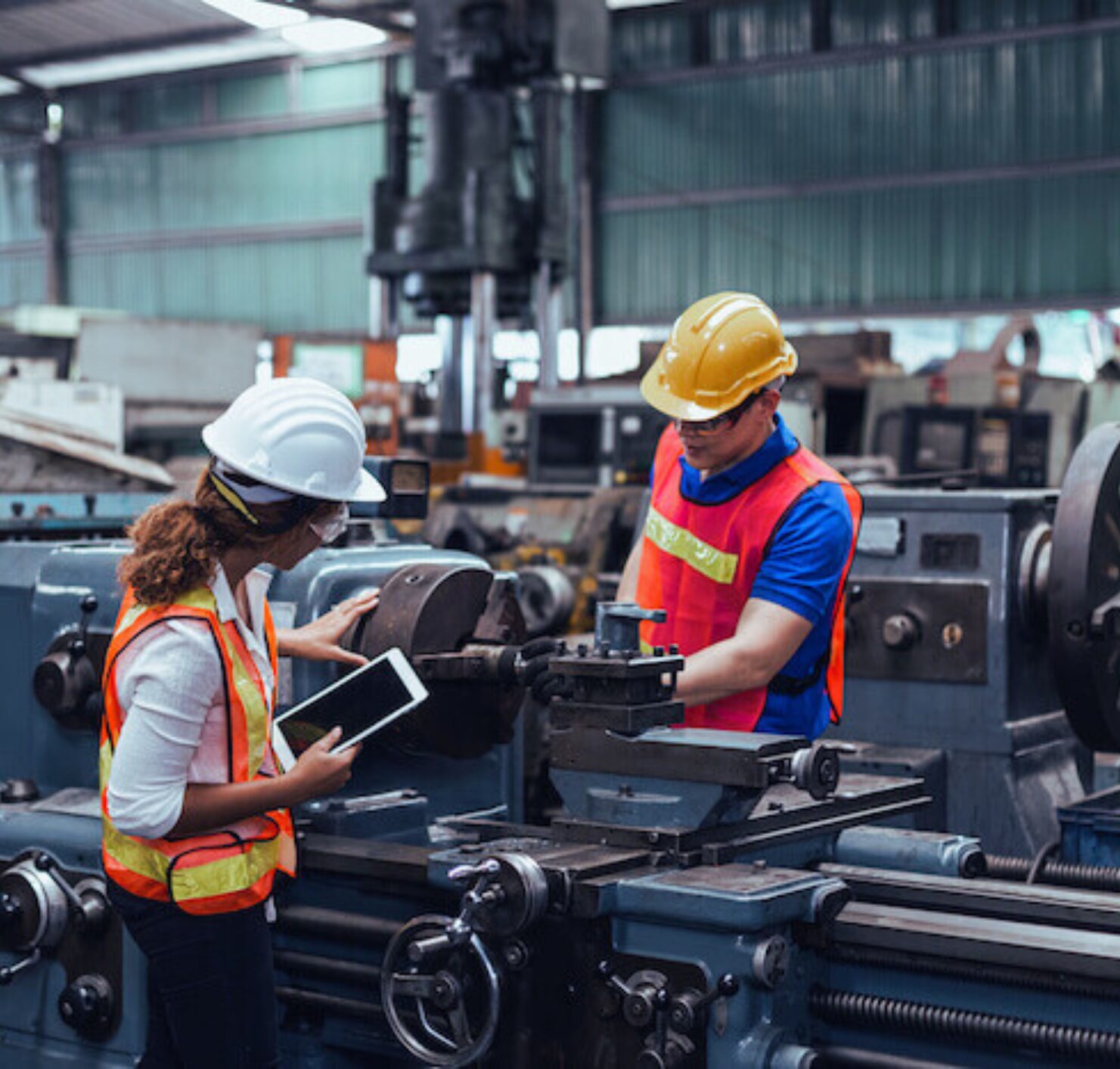
Augmented reality (AR) and virtual reality (VR) are taking center stage in the evolution of shop floor training and onboarding. These technologies offer immersive learning experiences that can accelerate the proficiency of new hires significantly.
AR can superimpose digital work instructions onto the real working environment, providing real-time guidance and reducing the risk of errors. VR takes training a step further by allowing employees to practice complex tasks in a controlled, virtual space before applying them in reality.
This method is particularly effective for high-risk procedures or when equipment is not readily available for training purposes. Training uses AR and VR to collect important data. This data gives insights into the effectiveness of training modules and the progress of individual employees.
This allows for continuous improvement in manufacturing training methods.
The Advent of AR & VR in Manufacturing Digital Work Instructions
The introduction of digital work instructions has been a game changer in the manufacturing industry. It has standardized the way information is conveyed on the shop floor, ensuring that every employee, regardless of their experience or the trainer’s expertise, receives the same quality of training. This uniformity is crucial for maintaining high standards of workmanship and safety.
Digital instructions are not just electronic versions of paper manuals. They are interactive and may include videos, diagrams, and checklists to help you understand and engage better.
By using them, manufacturers can reduce training and onboarding time, and easily update and distribute information. This is crucial for staying up-to-date with fast product changes and process enhancements. Additionally, they lay the groundwork for integrating more advanced technologies like manufacturing AR, which can further refine the efficiency and effectiveness of workforce training.
AR/VR Technology in Digital Work Instructions
Incorporating augmented reality and virtual reality into digital work instructions has taken the efficiency and effectiveness of shop floor training to new heights. Augmented reality in manufacturing allows for a blend of the physical and digital worlds, providing workers with an enhanced visual guide as they perform tasks. One example is using AR to project overlays onto machinery. This can help show the next steps, reduce errors, and speed up the learning process.
Virtual reality offers a lifelike training setting for employees. Employees can learn and practice skills without concerns about damaging equipment or interrupting work. This combination helps new hires learn skills faster and remember them better by using interactive and engaging experiences.
As a result, the combination of AR/VR with digital work instructions is setting a new standard for training and equipping employees with the tools they need to excel in modern manufacturing environments.
Considerations for Integration with Other New Technologies
The integration of AR and VR technologies is impacting connected worker platforms, enhancing the interactivity and effectiveness of the manufacturing workforce. These technologies provide an immersive experience that transcends traditional training methods, creating a digitally connected environment where information exchange is instantaneous and intuitive. Workers can receive real-time support and instructions tailored to their current task, minimizing downtime and facilitating a more streamlined workflow.
Furthermore, AR/VR can significantly reduce the learning curve for new machinery or processes, enabling workers to adapt quickly to changes on the shop floor. This enhanced connectivity not only improves individual performance but also promotes a culture of continuous learning and improvement. By leveraging AR/VR, connected worker platforms are becoming more agile, allowing manufacturers to respond more effectively to the demands of Industry 4.0 and maintain a competitive edge.
Enhancing Employee Experiences with AR & VR in Manufacturing
The incorporation of augmented reality (AR) and virtual reality (VR) into the manufacturing sector holds exciting possibilities for enhancing employee experiences. These technologies provide interactive and immersive training that has been shown to improve engagement and job satisfaction.
AR, in particular, offers hands-on learning without the risks associated with live equipment. Employees can visualize complex tasks and understand the intricacies of machine operations in a safe environment.

VR takes this a step further by creating simulated workspaces where employees can practice without the pressures of a live production environment. This leads to a more confident and competent workforce.
Additionally, AR and VR can gamify the training process, making it more enjoyable and rewarding. By harnessing the potential of AR and VR, manufacturers can create a more dynamic, informed, and motivated workforce ready to tackle the challenges of the evolving industry.
The Benefits
Augmented reality and virtual reality technologies are transcending traditional boundaries in the manufacturing sector, delivering a myriad of benefits. AR/VR enables manufacturers to simulate complex product assemblies, which can lead to a reduction in errors and an increase in overall product quality.
These technologies also play a crucial role in maintenance and repair tasks by overlaying digital information onto physical equipment, guiding workers through the correct processes. This not only reduces the time taken to complete such tasks but also significantly decreases the potential for equipment downtime.
Additionally, augmented reality and virtual reality contribute to enhanced safety training, allowing workers to experience hazardous scenarios without the real-world risks. By providing a safer, more informed, and highly efficient training environment, AR/VR technologies are proving to be invaluable assets in the pursuit of operational excellence within the manufacturing industry.
Outcomes
AR and VR technologies are acting as catalysts for a paradigm shift within the manufacturing industry, propelling it into a new era of efficiency and interactivity. These new technologies are changing how we operate machines, maintain them, and complete complex assembly tasks. Workers can now use digital replicas of their work environment to help them.” This has streamlined the training process, enabling workers to gain a deeper understanding of their tasks before they even set foot on the shop floor.
AR/VR can assist in real-time by displaying important information and data in front of the user. This can make decision-making easier.
The move towards a data-driven and visually-assisted work process is not limited to individual tasks. It involves transforming the entire shop floor ecosystem into a smarter, more connected, and responsive environment. The result is an industry that is more agile, more knowledgeable, and better equipped to meet the demands of the future.
Key Takeaways
- Interactive Training: AR/VR technologies have transformed the training methods on the manufacturing shop floor by providing real-time, interactive, and immersive learning experiences that significantly boost the proficiency levels of new hires.
- Efficiency and Standardization: The integration of AR/VR in digital work instructions ensures greater consistency, minimizes errors, and accelerates the learning process. These technologies facilitate a uniform training experience, thereby maintaining high standards of workmanship and safety.
- Enriched Employee Experiences: By enabling workers to visualize complex tasks and practice in simulated environments, AR/VR technologies not only improve job performance but also enhance job satisfaction, worker confidence, and engagement levels, ultimately fostering a more motivated and prepared workforce.
See How AR / VR Can Transform Your Shop Floor
Discover how our our platform can revolutionize your manufacturing operations. Let Docket be your catalyst for change, empowering you to build great products and inspire your workers.

